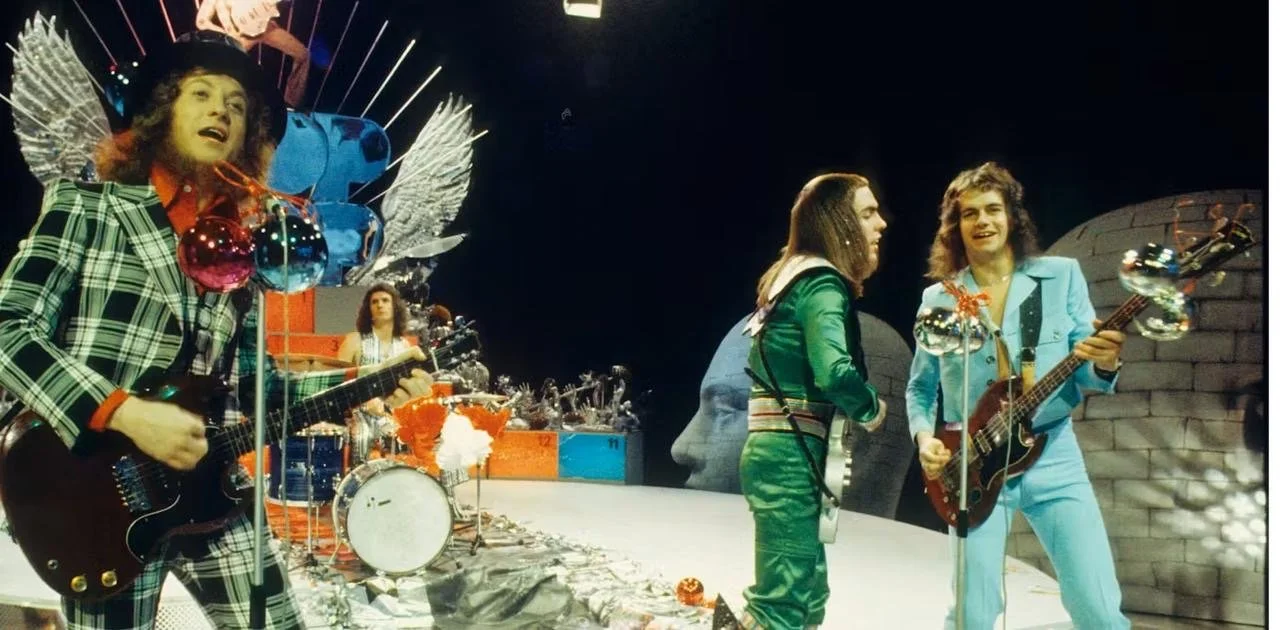
Looking Back: December, and the first battle for Christmas No.1
To quote Noddy Holder, “IT’S CHRIIISTMAAASS!!” Which of course, comes with a lot of excitement, and a lot of stress. It comes with questions of where to spend the big day, what to eat, what to buy, and of course the biggest question of all: who will be no. 1 on Christmas day! (Right?!)
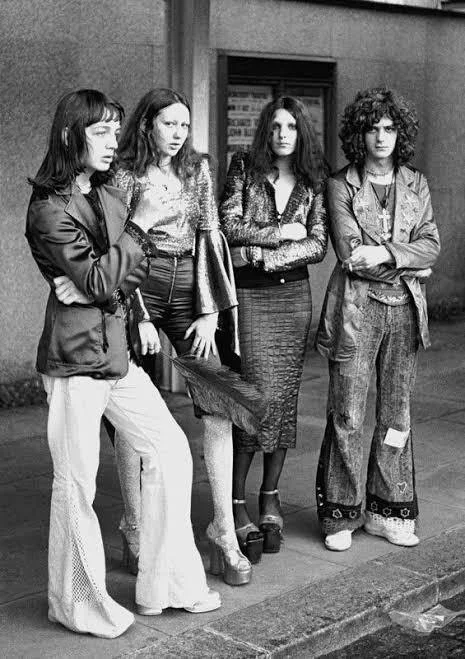
Of course, in our post-spotify world where retail streaming holds the greatest sway, it's utterly pointless. But, I certainly remember a time when this was a big question of the festive period, even of recent memory with the dominance of LadBaby. For decades we cared a little bit too much about who held the title, so much so that the Wikipedia page for Christmas music makes mention of this major achievement - for anyone who hasn't watched Love Actually. So, since it’s Christmas, I want to look back to a time when this question really mattered - the first time it had really been asked! All the way back to December 1973, when the bands Slade and Wizzard released their classic Christmas hits: ‘Merry Xmas Everybody’ and ‘I Wish It Could Be Christmas Everyday’...
Setting the stage:
An onslaught of Christmas releases is no anomaly to us now, as we’re plagued by new tracks hoping to edge into the plethora of festive playlists repeated each year. But this was not so much the case back then…

Christmas songs were of course nothing new in 1973. Carols date back centuries and were heavily integrated into the Victorian Christmas tradition, the foundation of a modern British Christmas. Then, with the rapidly growing popularity of vinyl, the ‘30s and ‘40s saw a succession of crooners releasing Christmas tracks: Frank Sinatra, Dean Martin, and of course Bing Crosby.* This is the period where Gene Autry popularises Rudolph, and where Frosty the Snowman is born. These tracks, and the post-‘50s blues / rock christmas singles (think Elvis and Darlene Love) are the old songs that granny always tells ya are the best. But there’s a problem, they’re all American, and they’re all consigned to a particular festive spirit in that particular swing style. That’s probably why no one cares that the easy listening ‘Here in my Heart’ by Al Martino (That’s Johnny Fontane for any Godfather fans out there), is technically the first UK Christmas no. 1.
They do not inhabit that camp, chaotic charm of a true British Christmas: one that actually cares about whether or not Bob the Builder would be champion of this crazy contest as we did in 2002. They’re not novelty hits in the true gaudy fashion. Enter the ‘70s, and there's a gap in the holiday market. As the first of this novelty-pop standard, Slade and Wizzard not only obliterated this gap, but ensured a future for novelty hits.** Starting a chart battle that would birth a British Christmas tradition, and heralding the rise of kitsch Christmas music in the process.
December, 1973 (Oh, What a Night)
So, let's actually go back to 1973. Whilst December is always a cold and dark one, this festive period was particularly marred. Prime Minister Edward Heath had just declared that Britain was in a ‘state of emergency’ the previous month, claiming that Britain would have the hardest Christmas known since the war. This was the year of the three day week, the OPEC oil crisis, and many, many miners strikes. December 1973 was just the opening credits for 1974, a year routinely ranked as one of the worst in living political memory. Who could imagine living through such a period of political and economic turmoil??? Yet even within all this turmoil, there was something strange going on in the world of pop. Glam rock, with its aggressive getup of glitter and platform boots was injecting everyone with that much needed dose of fun. With David Bowie and Mark Bolan at the forefront, there was a stream of artists in tow. Caked in makeup, and thrashing guitars, Britain was invaded by a glitter brigade, providing the strangest distraction to this adversity.
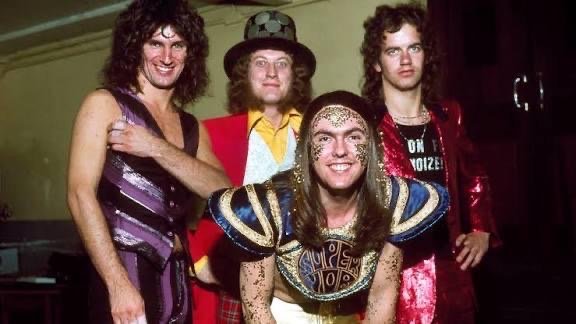
Slade, whilst a major player in the Glam Rock scene, have been unfortunately ejected from the pantheon of British rock. Characterised by Noddy Holder’s gravel gargling vocals, and Dave Hill’s outrageous glam garb, their image, sound, and attitude, was abrasive, yet kitsch. They are the essential ‘brickies in eyeliner’ of the glam era that Noel Gallagher once said were more influential on Oasis than the Beatles. So at least they’ll always have that. By the release of ‘Merry Xmas Everybody’ they were at the peak of Slademania, ruling the charts and breaking Beatles records, the single, with its raucous energy and simple foot stomping beat, was in character of their ‘70’s catalogue. Take away that opening organ (and maybe the lyrics) and the song would still have been a Slade hit any other month. Wizzard on the other hand, are perhaps of less relevance once the Christmas decs are being taken down. Essentially a project formed around the Move and Electric Light Orchestra co-founder Roy Wood, they mostly gained renown for Wood’s pantomime-esque performances, although they also provided some of the most bizarre visual imagery of the glam rock scene. Both bands though, were huge, and if you told either of them then that their entire legacy would be tangled in tinsel, I’m sure they’d have thrown a platform shoe at you.
So, it's 1973. On December 8th, Wizzard released ‘I Wish It Could be Christmas Everyday’. Over a week later on December 15th, Slade released ‘Merry Xmas Everybody’. Two Christmas pop singles in the same year? Who could have thought it? Lights were shone on this coinciding release, most of all by the cultural behemoth of ‘70s Top of the Pop. A rivalry of course ensued. Begging that question - for the very first time - of who would be no. 1 on Christmas Day.
On the 23rd December, the final chart data for the week before Christmas was revealed, and a champion crowned. ‘Merry Xmas Everybody’ triumphed over Wizzard, who would only peak at no. 4 in their chart run. Slade won the day, and the month, remaining at no. 1 until mid January. In fact, the single stayed in the charts until February, begging an even bigger question, of who was buying Christmas records in the New Year? But there was of course no loss for Wizzard, their song is still played, and the Christmas chart battle has lived on, with a British tradition that has lasted decades in the public consciousness. These singles are the ultimate Christmas classics. They’re camp and they’re catchy, with a longevity that was completely unrealised when both songs were being recorded in the summer of 1973. The 1995 Battle for Bitpop of Oasis and Blur might be the most famous chart battle in British music history, but this one is certainly the most significant.
These songs aren’t just Christmas songs, but anthems. Not only did they spark a new festive tradition, but they also reignited Christmas songs, bringing them back into fashion in the most unfashionable of ways: with glam rock. So, if you still care whose no. 1 on Christmas day, or remember the charity singles of the 80s, the reign of spicemania, or the dystopian dominance of the X-Factor, know that it’s all because of these guys in their glam drag, back in 1973.
* Fun Fact! for anyone putting together any christmas quizzes: ‘White Christmas’ remains the best selling single of all time!
** For anyone who loves fun and glam rock, The Wombles classic ‘Wombling Merry Christmas’ from 1974 is the ultimate Christmas novelty hit. Fun Fact! Sheffield icon Chris Spedding featured on guitar. (So being a Womble is punk.)